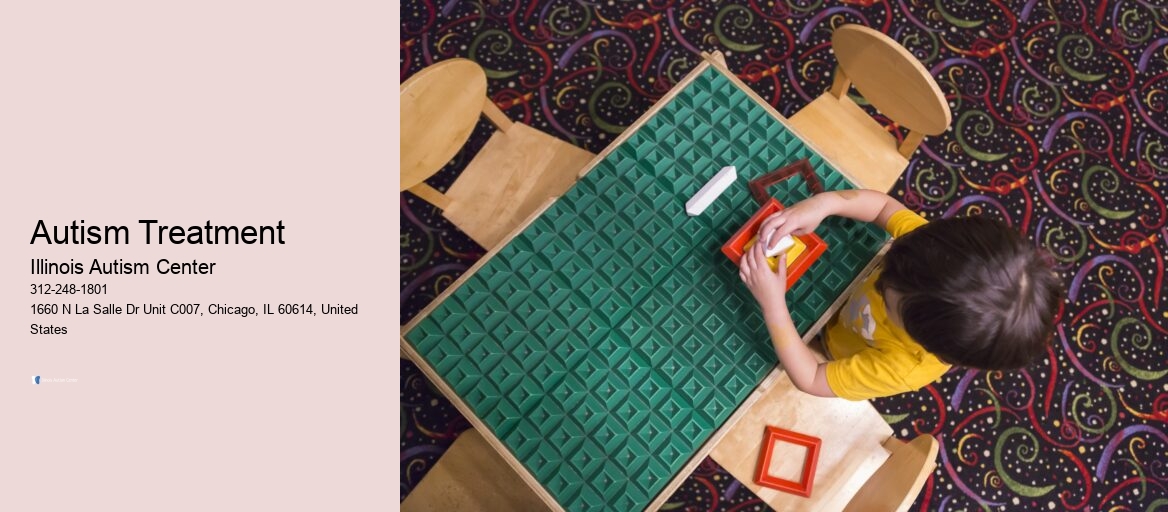
As a unique ABA therapy center, Illinois Autism Center is dedicated to serving autistic individuals up to the age of 18. We offer a safe and fun environment where children and their families receive the highest level of care. Our mission is to provide ethical, high-quality services that support autonomy, independence, and long-term success for children in Chicago and surrounding communities.
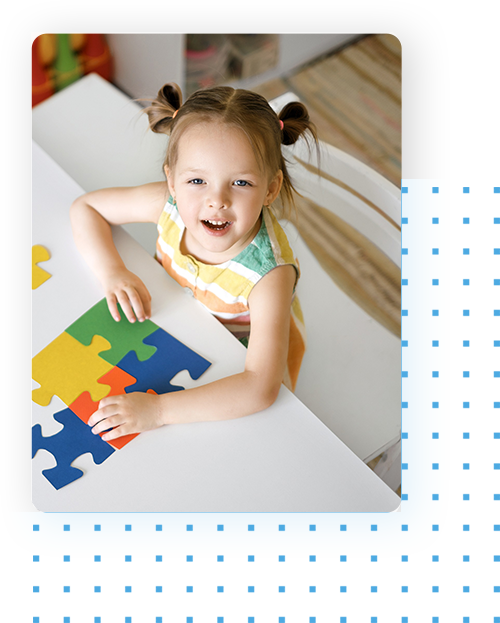
Preparing Your Child for ABA Therapy: Tips from Chicago Experts
Applied Behavior Analysis (ABA) therapy is a widely accepted approach to improving the social, communication, and learning skills of children with autism spectrum disorder (ASD) and other developmental conditions. As a parent, you play a critical role in your child's development and therapy success. Chicago is home to a diverse array of ABA experts who offer valuable insights into how parents can effectively prepare their children for ABA therapy. Here's a comprehensive guide with tips from these professionals to help you and your child embark on this therapeutic journey.
Understanding ABA Therapy
Before you can prepare your child for ABA therapy, it's essential to understand what ABA is and how it works. ABA therapy is based on the science of learning and behavior. It involves using various techniques to encourage positive behaviors and reduce unwanted ones. Chicago's ABA experts emphasize the importance of educating yourself about the therapy's principles and methods. This knowledge will enable you to support your child's learning process and reinforce the skills they acquire during their sessions.
Creating a Positive Outlook
Children are sensitive to their parents' emotions and attitudes. To set a positive tone for your child's experience with ABA therapy, it's crucial to convey enthusiasm and optimism about the process. Explain to your child that the therapy is a special time where they will play and learn new things. Frame it as an adventure they are embarking on rather than a task or obligation. The more positive you are about ABA therapy, the more likely your child will be to approach it with curiosity and openness.
Establishing Routines
Consistency and predictability can make a world of difference for children with ASD. Chicago experts recommend establishing a consistent routine around therapy sessions. This can include having a set time for sessions, a familiar route to the therapy center, and a routine for saying goodbye. By creating a predictable pattern, you help reduce anxiety and build a sense of security for your child.
Preparing the Environment
The environment in which your child will receive ABA therapy should be conducive to learning. At home, create a quiet, organized space where your child can focus on therapy tasks without distraction. Chicago's ABA therapists suggest incorporating elements that your child finds comforting, such as a favorite toy or blanket, to make the space feel safe and familiar.
Collaborating with Therapists
Effective preparation involves close collaboration with your child's ABA therapy team. Chicago professionals encourage parents to communicate openly with therapists about their child's likes, dislikes, strengths, and challenges. Sharing insights about your child's behavior at home can help therapists tailor their approach and ensure consistency between home and therapy environments.
Practicing Skills at Home
ABA therapy doesn't stop at the therapy center. Practicing the skills your child learns during sessions at home is vital for generalization and mastery. Chicago experts suggest engaging in activities that reinforce these skills in a fun and natural way. Whether it's through games, daily routines, or play, your involvement in practicing these skills can significantly boost your child's progress.
Managing Expectations
Finally, it's important to manage your expectations as a parent. ABA therapy is a gradual process, and progress may be slow at times. Chicago's ABA therapists remind parents to celebrate small victories and be patient as their child works towards their goals. Recognize that every child is unique, and their journey through ABA therapy will be too.
In conclusion, preparing your child for ABA therapy involves a combination of education, emotional support, environmental adjustments, and collaboration with therapists. By following these tips from Chicago's ABA experts, you can create a foundation for a successful therapeutic experience for your child. Remember to stay positive, be patient, and remain actively involved in your child's therapy process. With the right preparation and mindset, ABA therapy can be a transformative experience for both you and your child.
| Entity | Definition |
|---|---|
| Autism Learning Center | A center focused on providing educational and therapeutic services for individuals with autism, often integrating various teaching methods. |
| Autism Resources Center | A center that offers resources, information, and support for individuals with autism and their families. |
| Autism Wellness Center | A facility dedicated to promoting the overall well-being of individuals with autism through various therapeutic and support services. |
| Autism Therapy Specialists | Professionals who specialize in providing therapy for individuals with autism, often focusing on behavior, communication, and social skills. |
| Autism Family Center | A center that offers support, education, and resources for families of individuals with autism, helping them navigate treatment and care. |

How ABA Therapy Can Help with Challenging Behaviors in Autism
Autism Spectrum Disorder (ASD) is a developmental condition that affects communication and behavior. While the experiences of individuals with autism can vary widely, many face challenges in social interaction, repetitive behaviors, and may demonstrate behaviors that are considered challenging or disruptive. Applied Behavior Analysis (ABA) therapy is a well-regarded intervention that has been shown to be effective in addressing these challenging behaviors. In this essay, we'll explore how ABA therapy can help individuals with autism manage and overcome these challenges.
ABA therapy is a scientific approach to understanding behavior and how it is affected by the environment. The core principle behind ABA is that behaviors, both positive and negative, are learned and can therefore be changed through the manipulation of environmental factors. ABA therapy aims to increase behaviors that are helpful and decrease those that are harmful or affect learning.
One of the most significant ways ABA therapy helps with challenging behaviors is through functional behavior assessments (FBA). An FBA is used to identify the purpose or function behind a problematic behavior. For example, a child with autism might engage in self-injury when demanded to perform a difficult task, indicating that the challenging behavior serves as an escape from demands. Once the function of the behavior is identified, ABA therapists can develop targeted strategies to address it.
Another essential aspect of ABA therapy is the use of positive reinforcement. When individuals with autism engage in desired behaviors, they are rewarded with something they find valuable, which can range from praise to a favorite activity or a tangible item. Over time, this reinforcement helps to increase the frequency of the positive behavior. ABA therapists are trained to identify and utilize effective reinforcers to encourage behavior change.
ABA therapy also involves teaching new skills through a process called shaping. This involves gradually guiding individuals towards the desired behavior by reinforcing successive approximations of the target behavior. For example, if a child with autism struggles with social interactions, ABA therapy can help by breaking down social skills into smaller, teachable components, reinforcing the child as they master each step along the way.
Moreover, ABA therapy addresses challenging behaviors by teaching alternative, appropriate behaviors that serve the same function as the undesired ones. This method, known as functional communication training, provides individuals with autism with more acceptable ways of expressing their needs or coping with difficult situations. For instance, instead of throwing a tantrum to escape a task, the individual learns to communicate their need for a break verbally or through a communication device.
Generalization is another critical element of ABA therapy. Therapists work to ensure that the positive behaviors learned in therapy sessions carry over into other settings, such as home or school. This is achieved by practicing skills in a variety of contexts and with different people, so the individual with autism can apply what they've learned in the real world.
Data collection is integral to ABA therapy, allowing therapists to monitor progress and make necessary adjustments to the intervention plan. By recording how often a challenging behavior occurs, the conditions under which it happens, and how the individual responds to various interventions, therapists can provide personalized and effective therapy.
In conclusion, ABA therapy is a powerful tool in helping individuals with autism manage challenging behaviors. Through functional behavior assessments, positive reinforcement, skill shaping, teaching alternative behaviors, generalization, and data-driven decision making, ABA therapists can create individualized programs that lead to significant improvements. While ABA therapy requires commitment and consistency, the outcomes can be life-changing, not just for individuals with autism, but for their families and communities as well. With the support of ABA, many individuals with autism can develop the skills they need to lead more independent and fulfilling lives.
We provide ABA therapy for children and adolescents up to 18 years old.
Yes, we can provide testimonials and references from other families who have benefited from our services.
Goals are based on individual assessments and are tailored to each child's specific needs and developmental stage.
ABA therapy has been shown to be effective for many children with autism, though results can vary based on individual needs and circumstances.
Our therapists are highly trained and certified in ABA therapy and have experience working with children with autism.
We offer both individual and group therapy sessions, depending on the child's needs and therapy goals.
We offer high-quality, ethical ABA therapy in a fun and safe environment, focusing on promoting autonomy and future success.